
Mixed earnings and not so encouraging macroeconomic data dented sentiment, Ajit Mishra, VP - Research, Religare Broking Ltd said. In twin blows to Indian economic revival, higher food prices drove retail inflation to a five-month high of 7.4 per cent, while factory output fell for the first time in 18 months. The second consecutive month of rise in consumer price index (CPI)-based inflation will add to the pressure on the Reserve Bank of India (RBI) to again raise interest rates to tame high prices. In the broader market, BSE Midcap declined 0.73 per cent while smallcap dropped 0.45 per cent.

A yellow glow is likely to stand out amid grey geopolitical clouds in 2023, with gold price projected to touch Rs 60,000 per 10 grams in the Indian market as more investors veer towards safe-haven assets. In a year where volatility was more a norm than an exception, gold prices in the international market oscillated from a peak of $2,070 per ounce in March to a low of $1,616 per ounce in November and is steadily recovering since then, according to market experts. At the beginning of 2022, gold prices were around $1,800 an ounce.

Benchmark indices ended on a flat note on Friday after facing bouts of volatility during the day amid mixed global market trends. The BSE Sensex inched up 36.74 points or 0.06 per cent to settle at 58,803.33. During the day, it hit a high of 59,108.66 and a low of 58,558.64.

When AI is used to enhance operational efficiency, businesses can deliver the same product or service but with improved quality, faster, or even at a reduced cost

The commerce department has reaffirmed its plans to launch the 'Trade Connect' e-platform to help exporters connect with stakeholders of international trade, as a part of the new government's 100-day action plan, a senior government official said.

Equity indices fell on Thursday, mirroring weak global market trends following the US Federal Reserve's interest rate hike and hawkish stance. The 30-share BSE Sensex declined 337.06 points or 0.57 per cent to settle at 59,119.72. During the day, it tanked 624 points or 1.04 per cent to 58,832.78. The NSE Nifty went lower by 88.55 points or 0.50 per cent to end at 17,629.80.

Among the Sensex firms, HCL Technologies, Tata Motors, Hindustan Unilever, NTPC, IndusInd Bank, Bajaj Finserv, Bajaj Finance and Mahindra & Mahindra were the major gainers. Bharti Airtel, Reliance Industries, ICICI Bank and Asian Paints were the laggards.

Quiet hiring allows employees to expand their skill sets, making them more versatile and valuable to the organisation, says Sonica Aron, founder of the HR consultancy firm, Marching Sheep.

The stock of footwear major Bata India has been the highest gainer among larger listed footwear companies since the start of the month on expectations of a recovery in the value segment, new launches and measures by the new government to boost consumption. The third largest footwear maker by market capitalisation has been trailing its peers over the past few quarters due to the slowdown in the mass segment market which accounts for a significant chunk of its revenues.

What stood out in his 15-year journey as a member of the political executive at the Centre was his glowing record as India's most successful and effective finance minister. Both as prime minister and finance minister, he understood the importance of gradualism, except when the economy or the polity was in a crisis.

Benchmark indices rallied on Friday with the BSE Sensex climbing over 390 points to settle above the 56,000-mark amid fresh buying by foreign funds and largely positive global market trends. Intense buying in banking and finance counters also drove the indices higher. Rising for the sixth straight session, the 30-share BSE benchmark jumped 390.28 points or 0.70 per cent to settle at 56,072.23.

Stock markets squandered early gains but managed to end in the green on Friday, propped up by heavyweight Reliance Industries which announced another stake sale deal for its digital platform. A strengthening rupee and firm global cues also supported the domestic bourses, traders said.

Larger listed domestic-focused tyre companies have underperformed the benchmarks in the last three months but exporter Balkrishna Industries has bucked the trend. The company, which exports off-highway tyres, has generated 43 per cent returns in this time compared to MRF and Apollo Tyres, which are down 5-10 per cent. In addition to better-than-expected performance in the March quarter, exports and market share gains have helped Balkrishna pull ahead of peers.

Equity markets would watch out for global cues in absence of any major event on the domestic front, and indices may face volatility in view of the scheduled derivatives expiry this week, analysts said. "During the week, volatility is likely to remain high due to the scheduled derivatives expiry of November month contracts on November 25. "At the same time, the focus would largely remain on the global markets for cues, in absence of any major event on the domestic front," said Ajit Mishra, VP Research, Religare Broking.

Equity benchmarks continued their winning momentum for the third day on Thursday and jumped over 1.50 per cent, tracking an overall bullish trend in Asian equities. On the political front, the BJP headed for a second straight win in politically crucial Uttar Pradesh and dominated the trends chart in three other states. The 30-share BSE benchmark Sensex opened in the green and further zoomed 1,595.14 points or 2.91 per cent to 56,242.47 during early trade.

"We go into 2008 with economic data still robust, the government plan of infrastructure spending of about $400 billion on track, but on the backdrop of developments in the international markets and high valuations, we expect the Indian market to see high volatility," Fidelity International India fund manager Sandeep Kothari said.

Benchmark indices continued their downtrend for the fifth session on the trot on Thursday, with the Sensex tumbling nearly 817 points in early trade, tracking weak global trends and selling in index majors Reliance Industries and HDFC Bank. Unabated selling by foreign institutional investors also weighed on the sentiment. The 30-share BSE Sensex was trading 816.78 points lower at 53,271.61. The NSE Nifty declined 234.05 points to 15,933.05.

A number of companies are hitting the stock market with public offers despite the volatile investor sentiment, with three companies slated to launch their IPOs in the next two days, taking the total number to 12 this month.

India's manufacturing sector activity moderated in January amid slower increase in total sales, and headcounts were broadly unchanged amid sufficient staff numbers to cope with current requirements, according to a monthly survey. The seasonally adjusted S&P Global India Manufacturing Purchasing Managers' Index (PMI) fell from December's recent high of 57.8 to 55.4 in January, as factory orders and production rose at sharp, albeit slower, rate. The January PMI data pointed to an improvement in overall operating conditions for the 19th straight month.

Benchmark stock indices Sensex and Nifty rebounded to close over 1 per cent higher on Thursday, propelled by buying in index majors Reliance Industries, HUL and Infosys along with an overall positive trend in global markets. The 30-share BSE benchmark jumped 701.67 points or 1.23 per cent to end at 57,521.06. During the day, it zoomed 971.46 points or 1.70 per cent to 57,790.85 on the expiry of derivatives contracts. The NSE Nifty rallied 206.65 points or 1.21 per cent to 17,245.05.

From the Sensex pack, Larsen & Toubro jumped 4.26 per cent to emerge as the biggest gainer, followed by IndusInd Bank, Tech Mahindra, State Bank of India, HCL Technologies, Power Grid, NTPC, Axis Bank, Kotak Mahindra Bank, HDFC Bank and Wipro. Mahindra & Mahindra, Infosys, UltraTech Cement and Hindustan Unilever were the major laggards.

Equity benchmarks Sensex and Nifty ended on a mixed note on Wednesday as the euphoria about the Budget fizzled out, with investors going for profit-taking ahead of the Fed interest rate decision. The 30-share BSE benchmark Sensex climbed 158.18 points or 0.27 per cent to settle at 59,708.08 after it trimmed most of the intra-day gains. During the day, it had zoomed 1,223.54 points or 2 per cent to 60,773.44.

India's manufacturing sector saw a slower growth rate for the second straight month in May but stayed firmly in expansion mode with global sales increasing to the greatest extent in over 13 years, a monthly survey said on Monday. The seasonally adjusted HSBC India Manufacturing Purchasing Managers' Index (PMI) fell from 58.8 in April to 57.5 in May, signalling a slower but substantial improvement in the health of the sector. The index had climbed to a 16-year high of 59.1 in March.

'The Indian retail landscape is poised for a significant shift with the anticipated arrival of several prominent international luxury fashion brands in 2024.'

Manufacturing sector activities in India moderated in June from a 31-month high in May, but output remained in the growth territory, as new work orders expanded sharply amid favourable demand conditions, a monthly survey said on Monday. The seasonally adjusted S&P Global India Manufacturing Purchasing Managers' Index (PMI) fell from 58.7 in May to 57.8 in June. Despite the fall, the headline figure pointed to a considerable improvement in operating conditions, the survey said, adding that the demand strength positively impacted several other measures such as sales, production, stock building and employment.

The Financial Intelligence Unit-India (FIU-India), the national agency responsible for analysing suspicious financial transactions, has received requests from four more offshore crypto exchanges to operate in India again, said a senior government official familiar with the matter. In the beginning of 2024, India had banned nine crypto exchanges - Binance, Kucoin, Huobi, Kraken, Gate.io, Bitstamp, MEXC Global, Bittrex, and Bitfenix - for non-compliance with anti-laundering law in the country.

India's luxury car rental market is experiencing a surge in demand, particularly in Tier 1 cities such as Mumbai, Bangalore, and Delhi, with executive travellers, especially from the tech sector and younger demographics like the millennials and the Gen Z, increasingly renting high-end vehicles for special occasions and domestic travel. Luxorides, a luxury car rental company, observed a 40 per cent year-on-year rise in bookings in 2024 (until April) on popular routes like Delhi-Rishikesh, Delhi-Vrindavan, and Delhi-Jim Corbett National Park, as well as Chandigarh-Manali and Chandigarh-Ladakh.

Rising for the fourth straight day, benchmark indices Sensex and Nifty settled marginally higher after a choppy session on Friday, tracking mixed global trends amid uncertainties on the geopolitical front. The BSE Sensex opened weak and declined 414.44 points to 55,049.95 in opening deals. But within minutes, it pared all its losses and jumped 369.56 points to 55,833.95. Facing volatility, the index finally settled at 55,550.30, higher by 85.91 points or 0.15 per cent.

After remaining in the positive zone for three months, India's exports contracted 1.2 per cent to $33.98 billion in July, while the trade deficit widened to $23.5 billion.
Benchmark BSE Sensex rallied nearly 630 points while Nifty closed above the 16,500 mark on Wednesday after sharp gains in IT and energy shares amid positive global market trends. Buying in index majors Reliance Industries, Infosys and Tata Consultancy Services and FII inflows bolstered the sentiment. Shares of firms related to oil exploration and refineries were in heavy demand, with Reliance Industries rallying 2.47 per cent and ONGC by 4 per cent, as the government slashed windfall tax on petrol, diesel, jet fuel and crude oil.

Reserve Bank on Thursday retained the growth and inflation projection at 7.2 per cent and 4.5 per cent respectively for the current fiscal amid expectations of a normal monsoon. In its last bi-monthly monetary policy review in June, RBI had projected real GDP growth and retail inflation at the same.

From its recent lows, the stock of consumer major Marico is up 7 per cent on the back of a better-than-expected June quarter performance and robust outlook. In a pre-quarter update, the management indicated that domestic volume growth should witness an improvement in FY25, while other segments (growth portfolio, international business) too would see traction going ahead. The near-term trigger is strong sales and operating performance for Q1FY25.

The margins of tyre manufacturers could come under pressure given the rise in rubber prices and the moderating demand for tyres. In the past three quarters, the revenue growth for listed tyre companies has moderated from low to mid-single-digit on account of factors such as lower demand in replacement segments, weak export markets and the decline in the average selling prices to car makers (OEMs). Demand trends could remain muted in the near term, given the weak passenger vehicle replacement demand, assuming a typical replacement cycle of 3-5 years, and demand moderation in the OEM segment.

Equity indices faced a heavy drubbing on Thursday after an initial rally, with Sensex tanking 1,045.60 points amid a largely bearish trend overseas after the US Federal Reserve hiked rates by 75 basis points.

Investors' wealth tumbled over Rs 2.58 lakh crore on Monday as equity markets suffered a heavy sell-off, with the Sensex plunging 2 per cent. The BSE benchmark tanked 1,172.19 points or 2.01 per cent to settle at 57,166.74 after a weak opening. During the day, it plummeted 1,496.54 points or 2.56 per cent to 56,842.39. Tracking the weak trend in equities, the market capitalisation of BSE-listed firms tumbled by Rs 2,58,855.59 crore to stand at Rs 2,69,44,207.98 crore.

In a move that may boost the Indian hydrocarbon industry and bring more investments into the sector, the Union Cabinet on Wednesday decided to give marketing freedom to domestic crude oil producers, allowing them to sell petroleum to any company in the local market. The move is set to be beneficial for major crude oil producers, such as state-run Oil and Natural Gas Corporation (ONGC) and Oil India, and private sector majors like Vedanta's Cairn Oil and Gas and Reliance Industries. As of May 31, India was dependent on imports for 86 per cent of its crude oil consumption; domestic production sufficed the remaining 14 per cent demand.
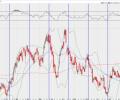
Once the US dollar launches into its final bull leg from the 79 region towards 84, the appreciating currency should put a lot of pressure on commodities that will perhaps trigger the capitulation that the market needs in commodities liker gold, silver and WTI crude, says Sonali Ranade.

Investors' wealth on Friday tumbled by over Rs 4.65 lakh crore as markets suffered a heavy selloff following weak global trends and continued selling by foreign institutional investors. The 30-share BSE benchmark Sensex plunged 889.40 points or 1.54 per cent to close at 57,011.74. During the day, it tumbled 950.16 points to 56,950.98. The market capitalisation of BSE-listed companies declined by Rs 465,570.82 crore to Rs 2,59,37,277.66 crore amid weak sentiments.

Chief Economic Advisor (CEA) V Anantha Nageswaran on Tuesday said India is not defending the rupee and the Reserve Bank of India is taking necessary steps to ensure that the movement of the rupee is gradual and in line with market trends. Nageswaran further said that the rupee is being managed in a manner that reflects the fundamentals of the economy. "India is not defending the rupee... I don't think Indian fundamentals are such that we need to defend the rupee. "The rupee can take care of itself," he said at an event in New Delhi.
